Showing posts with label no scar bunion. Show all posts

Monday, January 26, 2026

The Hidden Cost of Ignoring Bunions (And Why Early Treatment Matters

Ignoring bunions can lead to pain, joint damage, and limited mobility. Learn how early treatment options like scarless bunion surgery, minimally invasive bunion correction, and LAM bunionectomy can help protect your feet and quality of life.

Bunions are often brushed off as a minor inconvenience—something to tolerate, cover up with wider shoes, or put off dealing with until “later.” Many people don’t realize that bunions are a progressive condition, and delaying care can limit future treatment options, including advanced approaches like scarless bunion surgery and minimally invasive bunion correction. But bunions are not just a cosmetic issue. They are a progressive foot deformity, and ignoring them can come with real physical, emotional, and financial costs.

Understanding what happens when bunions are left untreated—and why early intervention matters—can help you protect not just your feet, but your overall quality of life.


What Is a Bunion, Really?

From a medical standpoint, a bunion is not just a bump—it’s a structural misalignment that can worsen over time if left untreated.

A bunion (hallux valgus) occurs when the big toe gradually shifts out of alignment, pushing toward the smaller toes. This creates a visible bump at the base of the big toe, where the joint becomes misaligned and inflamed.

Bunions don’t appear overnight. As the deformity progresses, the joint may become increasingly unstable, making early evaluation important for patients who want to qualify for no-scar bunion surgery or other minimally invasive options. They develop slowly due to factors like genetics, foot structure, repetitive stress, and footwear choices. And once they begin, they typically worsen over time.


The Physical Cost of Ignoring Bunions

Ignoring bunions doesn’t just mean tolerating discomfort—it often leads to long-term structural and functional problems.

1. Increasing Pain and Inflammation

Early bunion discomfort may come and go, but as the deformity progresses, pain often becomes more frequent and intense. The joint can become chronically inflamed, stiff, and tender—even during everyday activities like walking or standing.


2. Reduced Mobility and Activit

As bunion pain increases, many people unconsciously change how they walk to avoid pressure on the joint. Over time, this can limit mobility, reduce activity levels, and make exercise uncomfortable or impossible.


3. Secondary Foot Problems

Untreated bunions often lead to other foot issues, including:

* Hammertoes and claw toes

* Calluses and corns

* Metatarsalgia (pain in the ball of the foot)

* Nerve irritation or numbness


These secondary problems can be just as painful—and sometimes harder to treat—than the bunion itself.


4. Joint Damage and Arthritis

As the big toe joint continues to shift, cartilage can wear down, increasing the risk of arthritis. Once arthritis sets in, treatment options may become more limited and recovery more complex.


The Ripple Effect on the Rest of Your Body

Your feet are your foundation. When their alignment is compromised, it can affect the rest of your body.


Compensating for bunion pain can lead to:

* Ankle strain

* Knee pain

* Hip discomfort

* Lower back issues


What starts as a localized foot problem can quietly turn into a full-body alignment issue.


The Emotional and Lifestyle Cost

Bunions don’t just affect how you walk—they affect how you live.


Many patients report:

* Avoiding social events due to shoe discomfort

* Feeling self-conscious about their feet

* Giving up hobbies, travel, or exercise

* Daily frustration from persistent pain


Over time, these limitations can take a toll on mental well-being and overall happiness.


The Financial Cost of Waiting

Delaying treatment often leads to higher costs down the line. As bunions worsen, they may require more complex interventions, longer recovery times, and additional treatments for related foot problems.

Early care—whether conservative management or modern corrective techniques—can often reduce long-term expenses and downtime.


Why Early Treatment Matters

Early treatment is one of the most important factors in determining whether a patient is a good candidate for modern bunion correction techniques, including minimally invasive bunion surgery and LAM bunionectomy.


Access to Less Invasive Options

When bunions are addressed early, patients are more likely to qualify for advanced procedures such as scarless bunion correction, no scar bunion surgery, or LAM bunionectomy, which focus on correcting alignment through tiny incisions while minimizing disruption to surrounding tissues.


When addressed early, bunions may be managed with non-surgical treatments or minimally invasive procedures designed to correct alignment while preserving natural joint function.


Faster, Easier Recovery

Early intervention often means:

* Smaller corrections

* Less tissue disruption

* Quicker return to normal activities


 Better Long-Term Outcomes

Correcting a bunion before significant joint damage occurs can help maintain mobility, reduce recurrence risk, and protect overall foot health.


Modern Solutions Have Changed the Conversation

Many people avoid bunion treatment because they fear large incisions, visible scars, or long recoveries. Fortunately, modern techniques—such as minimally invasive bunion surgery and LAM bunionectomy—have changed the experience for many patients. Advances in foot and ankle care—such as scarless and minimally invasive techniques—have transformed what bunion correction can look like.

Today’s approaches focus on precision, alignment, and faster healing. In many cases, patients can walk sooner, experience less post-procedure discomfort, and avoid visible scarring with scarless bunion surgery.


Don’t Wait for the Pain to Decide

Early evaluation doesn’t mean immediate surgery—it means understanding your options while they are still available.

Bunions rarely get better on their own. Ignoring them doesn’t make them disappear—it often allows them to quietly worsen.

If you’re noticing early signs of a bunion or experiencing discomfort, seeking professional evaluation sooner rather than later can save you pain, time, and stress in the long run.

Your feet carry you through life. Taking care of them early is an investment in your comfort, mobility, and freedom for years to come.


Wednesday, December 17, 2025

Minimally Invasive Bunion Surgery: Transforming Your Foot Comfort with Top Podiatrist Dr. Kevin Lam

Bunions are more than a cosmetic concern — they can cause pain, limit mobility, and make everyday shoes uncomfortable. Thanks to minimally invasive bunion surgery (MIS), patients can now experience effective correction with smaller incisions, less pain, and faster recovery.


Here’s a closer look at what patients can expect before and after surgery

Before Surgery: The Challenge

Many patients come in with:

* Painful bunions making walking uncomfortable

* Difficulty finding shoes that fit properly

* Swelling, redness, or corns at the bunion site

* Reduced activity due to foot discomfort


Traditional bunion surgery often required large incisions and longer recovery times, which could impact daily life for weeks or months.


Patient Story – Before:

> “I struggled to find shoes that fit and avoided walks with my family because of the pain. I didn’t think surgery would let me be active again quickly.”


 The Minimally Invasive Solution

Minimally invasive bunion surgery uses tiny keyhole incisions and specialized instruments to correct the toe alignment without disturbing the surrounding tissue.


What makes MIS different:

* Small incisions, minimal scarring

* Reduced soft tissue trauma

* Less postoperative pain

* Faster recovery and return to activities


How It Works:

1. Small incisions are made at the bunion site.

2. Specialized instruments realign the toe bone.

3. Screws or pins stabilize the correction internally.

4. The foot begins healing with minimal disruption to soft tissue.


 After Surgery: The Results


*Early recovery: Most patients walk with a protective shoe almost immediately, experiencing less swelling and pain compared to traditional surgery.

*Long-term results:

* Straightened big toe with reduced bunion prominence

* Improved foot function and mobility

* Ability to wear regular shoes comfortably

* Return to daily activities and exercise sooner


Patient Story – After:

> “Within a few weeks, I could walk comfortably. Months later, my bunion is gone, and I’m back to hiking with my family. The small scars are barely noticeable!”


🔹 Why Choose Minimally Invasive Bunion Surgery?


Minimally invasive techniques offer:

* Faster recovery and less downtime

* Smaller scars and less noticeable to almost invisible incisions

* Preserved soft tissue for healthier healing

* Reliable correction of painful bunions


📅 Take the First Step Toward Comfort

If bunions are slowing you down, Dr. Kevin Lam can help determine if minimally invasive bunion surgery is right for you.


Schedule a consultation today to explore a treatment plan that helps you walk comfortably — sooner and with less disruption.


Saturday, December 7, 2024

Transforming Lives with Minimally Invasive Bunion Surgery: No Visible Scars, Only Stunning Results

Imagine living with bunions—those painful, unsightly bumps on your feet—and then waking up one day to smooth, pain-free feet without a single noticeable scar. Thanks to advancements in minimally invasive surgery, this dream is now a reality for many patients. At ScarlessBunion.com, we specialize in procedures that not only alleviate discomfort but also prioritize aesthetics, leaving your feet looking and feeling their best.  


What Makes Minimally Invasive Bunion Surgery Unique?  

Traditional bunion surgeries often require large incisions, leaving visible scars and necessitating lengthy recovery periods. In contrast, our minimally invasive technique uses small incisions—so tiny that they’re nearly undetectable after healing. The procedure is designed to correct the bunion effectively while minimizing trauma to the surrounding tissues.  


The Results Speak for Themselves  


Patients who undergo minimally invasive bunion surgery are amazed at the transformation. One look at a photo of both feet post-surgery tells the story:  

- No visible scars: The incision points are so small and strategically placed that they fade into the natural contours of the skin.  

- Symmetrical, natural-looking feet: The corrected alignment ensures not only a pain-free experience but also a visually pleasing result.  

- Faster recovery: With less tissue disruption, patients experience reduced swelling, less pain, and a quicker return to normal activities compared to traditional surgery.


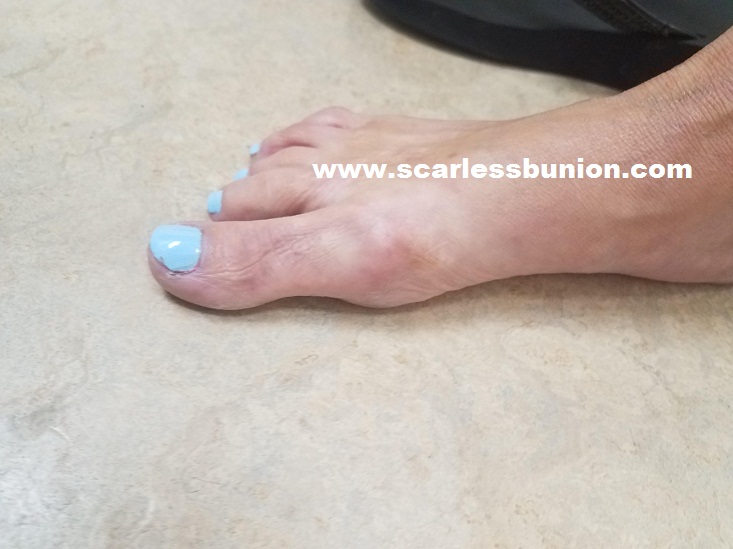
Both bunions have been fixed. You can't see the scar minimally invasive 100%


Why Choose Scarless Bunion for Your Treatment?  


Our team is dedicated to providing cutting-edge care, blending medical expertise with a focus on cosmetic excellence. Here’s why we’re trusted by patients:  

1. Experience and Precision: Each surgery is performed with meticulous attention to detail, ensuring optimal outcomes.  

2. State-of-the-Art Techniques: We use the latest tools and methods to provide effective results with minimal downtime.  

3. Patient-Centered Approach: From consultation to recovery, we prioritize your comfort, safety, and satisfaction.  


A Life Free from Bunions Awaits  

Imagine slipping on your favorite shoes or sandals without discomfort or embarrassment. Imagine walking, running, or simply standing for extended periods without pain. This is the freedom that minimally invasive bunion surgery offers.  

If you’re tired of living with bunions and hesitant about surgery because of concerns about scars or recovery time, it’s time to explore this innovative solution. Through the minimally invasive Lam Bunionectomy, we’re not just fixing feet—we’re restoring confidence and enhancing lives.  


Ready to Take the First Step?  

Contact us today for a consultation and see how minimally invasive bunion surgery can transform your feet and your quality of life. Your journey to pain-free, scarless beauty starts here.  


Tuesday, September 17, 2024

The Benefits of Minimally Invasive Bunionectomy: A Patient's 6-Month Follow-Up

Bunions can be a painful and frustrating problem, often causing discomfort and limiting mobility. Traditionally, bunion surgery has been associated with large incisions, significant recovery time, and permanent screws or wires left inside the foot. However, Dr. Kevin Lam and his team at the Family Foot & Leg Center have developed an advanced, minimally invasive approach to bunionectomy that delivers impressive results with less downtime.


Recently, a patient returned for a six-month follow-up after undergoing this minimally invasive bunionectomy. She was so pleased with the outcome on her first foot that she requested the same procedure for her other foot. Let's take a closer look at what makes this surgery so effective and why patients are experiencing such positive results.


What Makes It Minimally Invasive?

One of the standout features of this bunionectomy is the small incision used. Unlike traditional bunion surgery, which often requires a large incision on the top of the foot, Dr. Lam’s minimally invasive technique involves a small cut on the side of the foot. This minimizes scarring and reduces recovery time, making it a more patient-friendly option.


Another key difference is the use of temporary wires instead of permanent screws or implants. In traditional bunion surgery, screws are often left in the foot to hold the bones in place during healing. In this procedure, the wires are removed in the office once healing has progressed, leaving nothing behind inside the foot.


Impressive Healing Results

At the six-month follow-up, Dr. Lam was able to show excellent bone healing, with strong callus formation around the treated area. The bones had shifted significantly to correct the bunion, a necessary move for proper alignment. This shift may seem dramatic, but it is exactly what is needed to achieve optimal results, and the healing process demonstrated the procedure's effectiveness.


Dr. Lam also addressed a common concern among his patients. Some people may consult other doctors unfamiliar with this technique, leading to worry about whether the significant bone shift will heal properly. As the follow-up with this patient showed, the minimally invasive bunionectomy produces excellent healing and strong results even with a significant bone shift.


Faster Recovery and Lasting Results

One of the greatest advantages of this minimally invasive approach is how quickly it can deliver results. The technique allows for high intrametatarsal angles to be corrected without the need for more invasive procedures, such as osteotomy at the base of the bone or fusion surgeries like lapidus or lapiplasty. This patient not only had her bunion corrected, but a tailor’s bunion on the other side of her foot was also fixed without complication.


This cutting-edge approach has proven to be both efficient and highly effective, making it a great option for patients looking for a faster, less invasive way to correct bunions. The results speak for themselves, with many patients, like this one, seeing such success they return for the same procedure on their other foot.


Why Choose a Minimally Invasive Bunionectomy?


If you're dealing with the pain and discomfort of bunions and want a less invasive option for correction, this procedure might be ideal for you. The benefits include:

- Smaller incisions: Less scarring and quicker recovery time.

- Temporary wires: No permanent screws or implants are left in the foot.

- Faster healing: Excellent bone healing and quicker return to activity.

- Lasting results: Significant corrections can be made without more invasive surgeries.


At the Family Foot & Leg Center, Dr. Kevin Lam and his team are dedicated to using the latest techniques to provide their patients with the best outcomes. If you’re considering bunion surgery, schedule a consultation today to find out if a minimally invasive bunionectomy is right for you.

This advanced technique is transforming the way bunions are treated, giving patients a quicker, more comfortable recovery and long-term results they can be proud of. If you're tired of dealing with bunion pain, this minimally invasive procedure may be just what you need.


Saturday, April 27, 2024

Unveiling the Truth Behind Bunionectomies


Bunion surgery, or bunionectomy, has long been associated with discomfort, lengthy recovery periods, and visible scars. However, advancements in medical technology have paved the way for a revolutionary approach – minimally invasive bunion surgery. Let us look into the ins and outs of bunionectomies, explore the benefits of minimally invasive techniques, and shed light on what your doctor may not tell you.


Understanding Bunionectomies:

Bunions are a common foot deformity characterized by a bony bump at the base of the big toe. They can cause pain, swelling, and difficulty wearing shoes. While conservative treatments like padding, orthotics, and shoe modifications may provide relief, severe cases often require surgical intervention.

Traditional bunion surgeries involve making large incisions, realigning the bone, and often using screws or plates to stabilize the joint. However, these procedures come with drawbacks such as extensive scarring, prolonged recovery times, and the risk of complications.


Enter Minimally Invasive Bunion Surgery:

Minimally invasive bunion surgery represents a paradigm shift in the treatment of bunions. Unlike traditional methods, which require large incisions and significant bone manipulation, minimally invasive techniques utilize small incisions and specialized instruments to correct the deformity.

One notable approach is offered at ScarlessBunion.com, where surgeons employ state-of-the-art technology to perform bunionectomies with minimal trauma to surrounding tissues. This results in faster recovery times, reduced postoperative pain, and virtually invisible scars.


What Your Doctor Might Not Tell You:

Despite the numerous benefits of minimally invasive bunion surgery, many patients are unaware of this option. Some doctors may still recommend traditional techniques out of habit or lack of familiarity with newer methods. Additionally, insurance coverage for minimally invasive procedures may vary, leading some physicians to default to conventional approaches.

However, it's essential to advocate for yourself and explore all available options when considering bunion surgery. Doing thorough research, seeking multiple opinions, and asking specific questions about surgical techniques can empower you to make an informed decision that aligns with your needs and preferences.


Bunion surgery no longer needs to be synonymous with pain, visible scars, and lengthy recovery times. With the advent of minimally invasive techniques, patients can undergo bunionectomies with confidence, knowing that they're receiving cutting-edge care that prioritizes their well-being.

If you're suffering from bunions and contemplating surgery, don't settle for outdated methods. Explore the possibilities offered by minimally invasive bunion surgery and take the first step towards reclaiming your comfort and mobility.

Visit scarlessbunion.com to learn more about our innovative approach and schedule a consultation with our experienced team. Say goodbye to bunions and hello to a scarless, pain-free future!

----

Video Transcription:

This foot now, bunionectomy on this side?

"This was 6/21"

Okay, so we're talking about four months ago, about. This one is two weeks old. This is in the path of recovery here. As you can see, this is the minimally invasive bunionectomy. This was done about, again, four months ago. The complete healing. You see four months into the future. This is what it looks like at 2 weeks. She's doing great.  Little marks still there, the pins still there.  

We're gonna pull out the fifth toe pin today and wrap her up. We'll be alright. Pulling out the  fifth toe pin right now. One, two, three...fifth toe comes out in about 2 to 4 weeks but 2 weeks  should be sufficient for her. Again, we're gonna  look at the scars...there are none. This is the  minimally invasive bunionectomy. Again, this is 4 months out. And this is fresh at 2 weeks out.  

Double stabilization, the pin was just taken out the fifth toe today.  Awesome.

Well, today was an awesome day of the minimally invasive bunionectomy follow-up today. We have patients coming in from all over the United States, all over the world.  This is the most, I would say, 
the most amount of bilateral cases. 

Usually people get their bunionectomy they get horror stories about pain, et cetera, they don't come back for the second foot. Well, I can tell you, minimally invasive bunionectomy --a lot of people are coming back for both.

As you can see, two patients in a row today. This patient, did one four months ago, and she's 2 weeks into the other one. She's doing great. She came in sneakers on the one foot.

Minimally Invasive Bunionectomy, there's a lot of controversy between people that want to do the massive extensive incision versus minimally invasive.

You be the judge. Comes with experience and the technique and we're glad to be -- we're happy to be on the forefront of this technology.

The minimally invasive bunionectomy, keyhole bunionectomy or Cinderella bunionectomy. They call it many different ways. Either way, patients do really well with the Family Foot and Leg Center.

We keep you walking.
Naples, Florida up to Port Charlotte.
(239) 430-3668 (FOOT)
Option #2 for our schedulers.

You can also schedule yourself online, NaplesPodiatrist.com

Hope to meet you soon. Take care.